


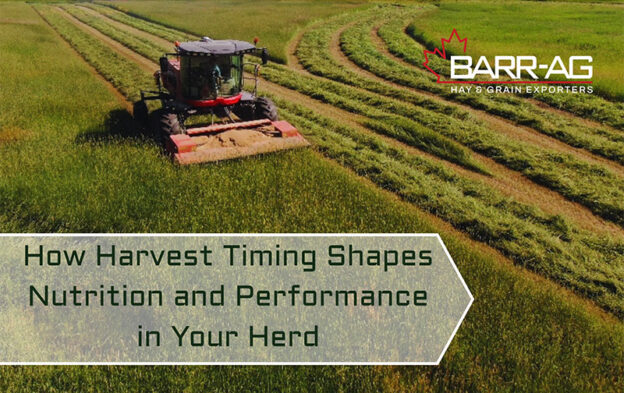
When it comes to forage quality, timing is everything.
A few days can make a noticeable difference in protein levels, fiber content, digestibility, and ultimately how your herd performs. Whether you are feeding dairy cows, beef cattle, horses, sheep, or goats, understanding the impact of harvest timing can help you make better purchasing and feeding decisions throughout the season.
The Growth Stage Matters More Than Most Producers Realize
As forage crops mature, the plant naturally shifts from producing leafy, nutrient-dense growth to developing more structural fiber and seed material. This is true across nearly all forage types, including alfalfa, timothy, orchard grass, mixed hay, silage, and straw products.
Early-cut forage is typically:
- Higher in protein
- Lower in fiber
- More digestible
- Softer and more palatable
- Higher in energy
Later-cut forage is generally:
- Lower in protein
- Higher in fiber and lignin
- Less digestible
- Coarser in texture
- Better suited for maintenance diets or dry animals
The challenge each season is balancing yield and quality. Waiting longer often increases tonnage per acre, but nutritional quality steadily declines as the crop matures.
Protein Levels Decline Quickly with Maturity
Protein is one of the first nutrients affected by delayed harvest timing.
In early vegetative growth stages, plants contain a high proportion of leaves, which are rich in crude protein. As the crop matures, stem development increases and leaf-to-stem ratio declines. This causes overall protein levels to drop.
For example:
- Early-cut alfalfa may test above 20% crude protein
- Mid-bloom alfalfa can drop significantly lower
- Mature grass hay may contain only moderate protein levels suitable for maintenance feeding
For high-performance animals such as lactating dairy cows, growing calves, or performance horses, that protein difference can directly impact production and body condition.
Fiber Increases as Forage Gets Older
As forage matures, structural carbohydrates such as NDF (Neutral Detergent Fiber) and ADF (Acid Detergent Fiber) increase.
Higher fiber levels reduce:
- Digestibility
- Dry matter intake
- Energy availability
This is especially important in dairy and feedlot rations where maximizing intake and feed efficiency is critical.
Lower digestibility means animals simply cannot extract as much usable nutrition from the forage.
Even if yields are higher, performance may suffer if quality declines too far.
Digestibility Drives Performance
Digestibility is often one of the most overlooked forage quality factors, yet it has one of the biggest impacts on animal performance.
Highly digestible forage supports:
- Better feed conversion
- Improved milk production
- Higher average daily gain
- Healthier rumen function
- Reduced supplemental feed requirementsBetter feed conversion
- Improved milk production
- Higher average daily gain
- Healthier rumen function
- Reduced supplemental feed requirements
Earlier-harvested forage generally contains less lignin, allowing animals to break down and utilize nutrients more efficiently.
For horse owners, digestibility and softness also contribute to safer, more consistent feeding programs with reduced sorting and waste.
Palatability Affects Intake
Animals will almost always consume softer, leafier forage more readily than coarse, stemmy material.
Palatable forage encourages:
- Higher intake
- More consistent feeding behavior
- Less waste
- Better overall condition
This becomes particularly important during periods of stress, heat, transition feeding, or when managing young or high-producing animals.
Even the best forage analysis means little if animals refuse to eat enough of it.
Weather and Timing Work Together
Harvest timing is not only about plant maturity — it is also heavily influenced by weather conditions.
Producers must constantly balance:
- Nutritional targets
- Rain forecasts
- Moisture levels
- Field conditions
- Drying windows
Cutting early may preserve nutrition, but weather delays can impact color, leaf retention, and overall quality. That is why premium first-cut forage is often limited and highly sought after each season.
Matching Forage to the Right Feeding Program
Not every operation requires ultra-premium dairy-quality forage. The ideal harvest stage depends on the class of livestock being fed.
Higher-quality early-cut forage is typically best suited for:
- Lactating dairy cattle
- Young growing animals
- Feedlot starter rations
- Performance horses
- Breeding stock
More mature forage can still provide excellent value for:
- Dry cows
- Maintenance diets
- Backgrounding programs
- Beef cow wintering rations
The key is understanding what your animals need and sourcing forage that matches those nutritional goals.
Plan Early for First-Cut Forage Availability
Every season, demand for high-quality early-cut forage moves quickly. Once premium first-cut inventory is committed, availability can become limited.
Joining an early-season buyer list helps secure access to:
- First-cut allocations
- Preferred forage specifications
- Consistent supply programs
- Priority booking opportunities
If securing premium forage quality is important for your feeding program, now is the time to start planning ahead for the upcoming harvest season.
To learn more about our forage programs or discuss your operation’s nutritional requirements, contact Barr-Ag to secure your early-season forage allocations.