


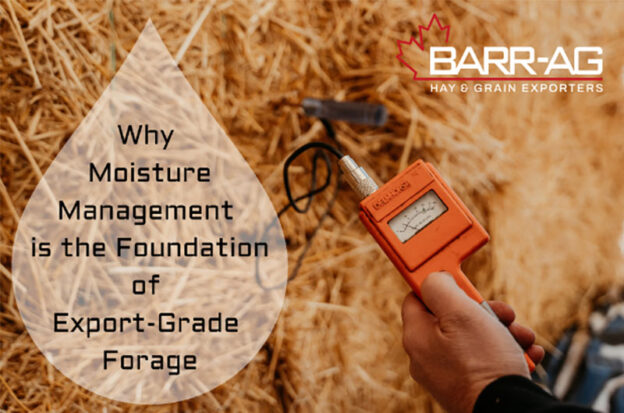
When evaluating forage quality, most buyers focus on protein, fiber, digestibility, and relative feed value. While these metrics are important, one critical factor often determines whether forage maintains its nutritional value from harvest to feeding: moisture management.
Proper moisture management is the foundation of producing and delivering export-grade forage. From the moment a crop is cut until it reaches the end user, moisture levels must be carefully monitored and controlled to prevent mold, heating, spoilage, and nutrient loss.
Whether the product is alfalfa, timothy, mixed hay, straw, or silage, managing moisture correctly helps preserve forage quality and protects the value of every bale.
Quality Starts in the Field
The moisture management process begins immediately after harvest.
Freshly cut forage contains a significant amount of moisture that must be reduced through proper curing before baling. The goal is to remove enough moisture to ensure safe storage while preserving leaves, colour, and nutritional value.
Baling forage too wet can create serious challenges:
- Mold growth
- Excessive heating
- Nutrient degradation
- Reduced palatability
- Increased risk of spoilage during storage or transit
On the other hand, allowing forage to become excessively dry can increase leaf loss, particularly in alfalfa and other legume crops, resulting in reduced feed value.
Achieving the proper moisture balance is one of the most important decisions during harvest.
Why Moisture Matters for Nutritional Value
Many producers recognize that excessive moisture can cause mold, but fewer realize how significantly it can affect forage nutrition.
When moisture levels are too high, biological activity continues within the bale. This activity generates heat and can lead to nutrient losses over time.
Excessive heating may:
- Reduce protein availability
- Lower energy value
- Decrease digestibility
- Cause discoloration and quality deterioration
Forage that initially tested well can lose nutritional value if moisture is not properly managed during storage.
Maintaining appropriate moisture levels helps preserve the protein, energy, fibre characteristics, and overall feed quality that livestock producers depend on.
Preventing Mold and Heating
Mold and heating are among the most common causes of forage quality loss.
When excess moisture remains trapped within a bale, microorganisms can continue to grow and reproduce. As microbial activity increases, temperatures inside the bale rise.
This process can result in:
- Mold development
- Musty odours
- Reduced feed intake
- Increased waste
- Loss of marketability
In severe cases, excessive heating can create fire risks within forage storage facilities.
Careful moisture management, combined with proper storage practices, significantly reduces these risks and helps maintain forage quality throughout the supply chain.
The Importance of Testing and Monitoring
Producing export-grade forage requires more than visual inspection.
Moisture testing provides valuable information throughout the harvest and storage process, helping ensure forage is baled and stored under appropriate conditions.
Regular testing allows producers and processors to:
- Verify moisture levels before baling
- Monitor stored inventory
- Maintain consistent product quality
- Reduce spoilage risk
- Meet customer specifications
Accurate testing helps support quality assurance programs and provides confidence that forage will perform as expected upon delivery.
Storage Conditions Matter
Even properly cured forage can lose quality if storage conditions are inadequate.
Protecting forage from moisture after harvest is just as important as achieving the correct moisture level before baling.
Best practices include:
- Storing forage in well-maintained facilities
- Protecting inventory from precipitation and ground moisture
- Promoting adequate airflow
- Monitoring storage conditions regularly
- Handling bales carefully to preserve integrity
Effective storage management helps maintain forage quality from harvest through shipment and feeding.
Moisture Management Across All Forage Types
Although moisture targets vary between products, moisture management is essential across all forage categories.
For example:
- Alfalfa requires careful curing to preserve leaves and protein.
- Grass hay benefits from proper drying to maintain colour and digestibility.
- Straw must remain dry to prevent mold and storage losses.
- Silage depends on controlled moisture levels to support proper fermentation and feed stability.
Regardless of forage type, moisture management directly influences product quality, consistency, and performance.
Building Confidence Through Quality Control
Forage buyers around the world depend on consistent quality and reliable performance. Achieving those standards starts long before a bale is loaded for shipment.
Proper curing, moisture testing, handling, and storage practices work together to preserve nutritional value and ensure forage arrives in the condition customers expect.
At Barr-Ag, we understand that moisture management is one of the most important factors in maintaining forage quality. Our focus on proper handling, testing, and storage helps ensure customers receive forage products that meet demanding domestic and international requirements.
To learn more about our forage programs or discuss your forage requirements, contact Barr-Ag today.