Author Archives: Social Media OTR Web

All About Alfalfa

We learned in last month’s blog article that alfalfa hay supports milk production in dairy cattle because of its high energy value and low fiber content.  There are many beneficial nutritional attributes in alfalfa hay that, over other forage choices for dairy cows, give producers the best economic value.

Dairy farmers are not the only producers that benefit from alfalfa hay.  It is used as forage nationally and internationally for other livestock like horses, sheep and goats.  Beef cattle producers are attracted by the high protein and energy value of alfalfa hay, and there are many advantages to feed beef cows this high quality forage.

Nutritional Value of Alfalfa Hay

This high protein and high energy forage also holds high mineral values.  Beef cows that consume alfalfa hay will benefit from quick nutrient absorption due to the lower fibre content.

Alfalfa Hay: Protein & Energy

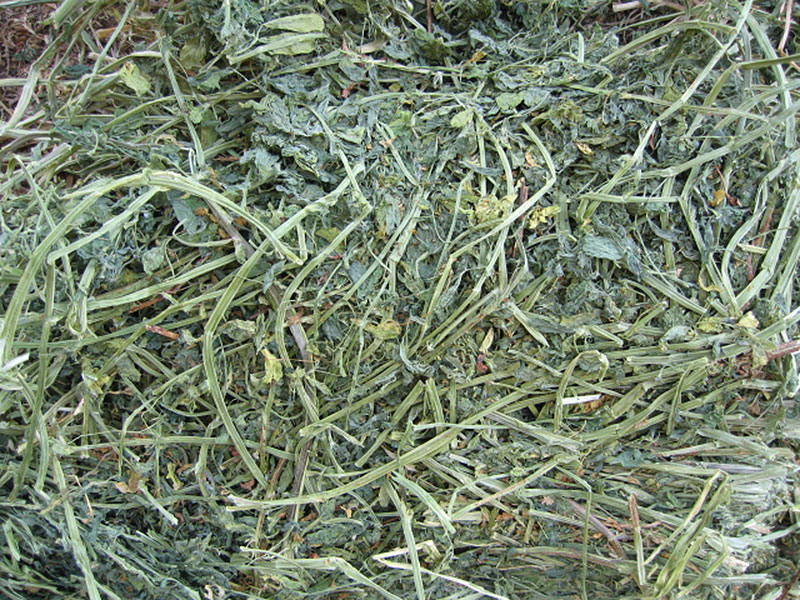
Alfalfa hay in the late bud, early bloom stage can contain 16-20% crude protein.  Even alfalfa hay cut later can still contain 12-15% crude protein, while fiber content rages from 20-28%.  The digestion rate of alfalfa hay is about 36 hours.  Lower quality forages contain much less protein and more fiber, which contribute to digestion taking up to 70 hours.  The actual quality of protein in alfalfa hay is excellent with more than 70% of the total protein being digestible. (University of Nevada, Cooperative Extension Fact Sheet 93-23)

Although alfalfa hay is known for its high protein content, its high energy content should not be overlooked.  Beef cows need high energy forage to regain body weight after calving and producing milk for calves so they are ready to re-breed sooner.  Since alfalfa hay is digested much quicker than other forages, beef cows are able to gain poundage faster, produce more milk for their calves, and maintain a better condition.

Alfalfa Hay:  Vitamins & Minerals

Alfalfa hay has a high nutritional quality.  Alfalfa contains vitamins A, D, E, K, U, C, B1, B2, B6, B12, Niacin, Panthothanic acid, Inocitole, Biotin, and Folic acid.

Freshly harvested alfalfa hay is very rich in vitamin A, which can actually help reduce stress in animals caused by moving or shipping cattle.  Vitamin E can help eliminate ‘white muscle disease’, which can cause losses in calves due to a deficiency of vitamin E and selenium.

It also contains the following minerals:  Phosphorus, Calcium, Potassium, Sodium, Chlorine, Sulfur, Magnesium, Copper, Manganese, Iron, Cobalt, Boron, and Molybdenum and trace elements such as Nickel, Lead, Strontium and Palladium.

If one pound of alfalfa hay is fed per 100 pounds of body-weight, beef cows will meet their daily requirements for calcium, magnesium, potassium, sulfur, iron, cobalt manganese and zinc.  The high levels of calcium in alfalfa hay are beneficial to lactating beef cows and developing heifers and bulls.

Barr-Ag Alfalfa

Barr-Ag alfalfa hay is GMO-free and graded by an independent laboratory analysis.  Clean air, long warm days, cool nights, soil rich in calcium and magnesium give us more than ideal growing conditions for high qualify alfalfa hay.

These growing conditions, combined with the nutritional attributes of alfalfa hay for dairy cow, beef cow, and other livestock producers, have brought us customers from all over the world!

Come give us a visit, or contact us for more information at 403 507 8660 or email [email protected].


Sources:  North American Alfalfa improvement Conference www.naaic.org,  University of Nevada Corporate Extension, http://www.unce.unr.edu/publications/files/ag/

Timothy Hay – Natural Crop Production

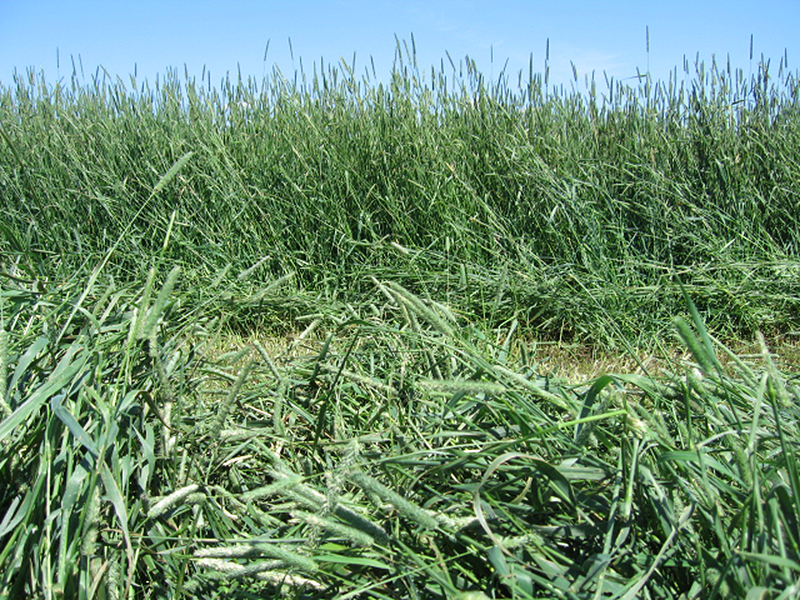
The Canadian Rocky Mountains. Banff National Park. The region congers up images of unspoiled wilderness hikes and skiing in a majestic winter wonderland; the great outdoors at its finest. For dairy farmers and race horse owners, the eastern slopes of the Canadian Rockies are famous for something else. Hay. The region boasts Timothy hay of acclaim the world over.

Timothy hay grown at the higher altitudes of the eastern slopes of the Canadian Rockies is extremely palatable. The growing season in this region is characterized by long warm days and cool nights- ideal conditions for producing Timothy hay with higher sugar content.

The region is also characterized by long, inhospitable winters; unpleasant yet advantageous for the purposes of crop production. Unlike crops grown in areas with longer growing seasons and milder winters, the sub-zero temperatures of this area enable a more natural method of husbandry. There is little to no need for pesticides and herbicides because the same winter that is inhospitable to humans is also inhospitable to many pests and weeds.

The shorter growing season means that land isn’t forced to produce by the use of artificial fertilizers. Where hay producers in warmer climates may coax 6 or 7 cuttings out of a given area in a season by using artificial fertilizers, only 1 or 2 cuttings in a season are possible east of the Canadian Rockies. The land has time to recover so the following year’s crop is grown in rich, healthy soil.

Barr-Ag Ltd is a producer and exporter of  Timothy hay, grain and forage. Our operation is based out of Olds, Alberta, near the eastern slopes of the Canadian Rocky Mountains. If you are interested in finding out more about Barr-Ag’s hay and grain and export operation, visit our website at www.barr-ag.com

High Quality Forage Benefits Dairy Cows

There are many benefits of high quality forage, as the saying goes: you get what you pay for.  You can reverse that statement by saying you don’t get what you don’t pay for.  Or even that you could pay for it later!  Studies have shown that when dairy producers invest in high quality forage they will see a valuable return on that investment.

Choosing High Quality Forage

Optimal animal performance can improve with high quality forage.  It is essential for weight gain, producing higher levels of milk, increasing reproduction success, and farm’s profits.  It’s important to give your dairy cows the appropriate type and amount of feed according to their specific nutritional needs.  Factors that could help define these needs include: sex, age, species, and production status.

When choosing your high quality forage for either beef or dairy cows it’s also important to think about the follow factors: whether the cows will eat the feed, how much of the feed they will actually eat measured against how much energy is required for their specific activity (milk production, breeding, beef production, etc.), digestibility, nutrient content, and any negative factors the forage might have on a specific cattle group.

High quality forage performs at its best when it is harvested young.  As crops like alfalfa mature the fiber content increases, lowering the quality.  Forage that is too high in fiber slows digestion.  With slower digestion the animal will not take in as much and might not consume enough energy to meet their activity requirements.

High Quality Forage Boosts Milk Production in Dairy Cows

Milk production has high nutrient demands on dairy cowsDairy cows have to consume large quantities of food to consume enough energy to keep producing milk.  In some cases a dairy cow cannot physically eat enough feed to meet the requirements of milk production; and the cow’s body fat could start depleting in an attempt to meet those energy requirements.  This is a problem.

High quality forage like Alfalfa hay can greatly benefit dairy cows and milk production.  Alfalfa hay contains less neutral detergent fiber and is more digestible.  Also, high quality forage like early harvest alfalfa is lower in fermentable fibre and passes through the digestive system faster, allowing the cow to consume more.  That means dairy cows that consume high quality forage are able to increase both their energy intake and total milk produced.  Talk about getting your cake (alfalfa hay) and eating it too!

Milk that is produced with a higher fat concentration is can usually be sold for a premium.  Since high quality forage is high in the right type of fiber it also supports milk fat production, which in turn affects the producer’s bottom line.

A study came out of the University of Wisconsin that was able to conclude that the milk response of dairy cows fed different levels of alfalfa forage quality was improved when fed more high quality forage.  They were able to prove that high quality forage contains more energy and also allows dairy cows to eat more!

The study also tested adding a concentrate like grain to lower quality forage to try to offset reduced milk production resulting from low quality feed.  High producing dairy cows are sometimes fed concentrates to help boost the energy content of their feed.  Even adding this concentrate could not improve the results of the feed.  Here are their examples:

Early bloom alfalfa with 54% concentrate produced almost as much milk as pre-bloom alfalfa with 20% concentrate, but no amount of concentrate would produced over 70 lb of fat corrected milk from mid or full bloom alfalfa.  Further, the 71%-concentrate formulations are not sustainable, due to animal health problems associated with low fiber. 

They also found that the actual fat concentration of the milk produced fell as the added concentrate increased.  With milk with high fat concentration going for top dollar, adding too much concentrate to the feed could affect a dairy producer’s profit.

View their study results and further research on high quality forage.


Sources:  http://www.extension.org/pages/26278/in-vivo-digestibility-of-forages, http://extension.umass.edu/cdle/fact-sheets/harvest-management-high-quality-alfalfa-hay


Mixed Hay for Horses

During our winter season in Alberta, horses are unable to forage in pasture and hay becomes their main food source.  When choosing hay for your horses, it’s important to be mindful of not only the quality of hay you are offering your horses, but also the type of hay.

Generally, hay can be classified in three different types.  Legume hay, that would include hays high in protein and nutrients like alfalfa, is very popular among horse owners.  Grass hay, which would include timothy, orchard, and fescue are also popular, especially for adult horses.  Mixed hay is usually a blend of grasses and legumes and with the right combination horses are eager to dive in!

Mixed Hay

Mixing grass hays with legume hays has its advantages, including benefits to growers and producers.  Growing legume hay like alfalfa will help add nitrogen to the soil by nitrogen fixing.  In fact, alfalfa could fix up to 500lbs of nitrogen per acre and this nitrogen usually goes directly to the plant.  This natural process can help cut down on fertilizer use and growing costs.

What are other other benefits of choosing mixed hay for your horses?  They love it!  Adding legume hay to grass hay may increase the appeal of the feed for most horses and in many cases it is very easy for them to eat.  Plus, introducing a legume like alfalfa in mixed hay also improves the feeds quality by increasing vitamin A, protein, calcium, and the amount of energy in the feed.

If you throw down a grass hay flake and a legume hay flake, your horse may go straight for the legume hay.  When you grow your different hays together, it becomes too difficult for picky eaters to separate out the tasty portions.  Some horse owners prefer the mixed hay because it ensures their horses are getting a balance of key nutrients, making them strong and healthy.

Mixed Hay Right for your Horse?

Remember that each horse’s food requirements vary and are dependent on age, stage of development, workload, activity and metabolism.  You should always consider each individual when choosing hay for your horses and when deciding on portion sizes during feeding times.

Because legume hay tends to be higher in protein, calcium, vitamin A, and calories than grass hays, they make a great feed for young and growing horses, high performance athletes, and lactating mares.

Grass hay is usually lower in protein and energy and higher in fibre.  This makes it a good choice for most adult horses.  It satisfies their appetite, but cuts down on the excess calories and protein they may not need.

Mixed hay will give your horses the dietary benefits of alfalfa without giving them the excess they might not require.  According to the American Association of Equine Practitioners, too much excess could predispose young horses to problems like developmental bone disease and epiphysis.  If you are unsure, consult your veterinarian when putting together your horses diet plan.

Mixed Hay Sales from Barr-Ag

Consider Barr-Ag when choosing hay for your horses!  While Barr-Ag grows some irrigated mixed hay, most of our mixed hay crop is grown on dry land. It is a versatile crop which combines non-GMO alfalfa, Timothy, orchard hay, brome hay and fescue.

For further information about mixtures currently available or to schedule a visit, contact us.

Exporting Canadian Grain – The Grain Handling System

The Canadian Grain industry is heavily regulated in Canada.  That means customers from overseas can always be provided with reliable, consistent product.  The Canadian Grain Commission (CGC) is an agency of the federal government.  It makes sure that all grain exported from Canada has been through the regulated grain handling system and has been officially certified.

Canadian grain such as oats, barley, wheat, and oil seeds are exported internationally and often travel great geographical distances.  Although Canadian grain are transported in massive quantities, they are not stored in terminals.  They are stored at farms that produced the grains.  Then, when a certain kind of Canadian grain is wanted by an international customer, it is delivered from the farmer and moved into export position.

Canada’s Grain Handling System

Canada’s unique grain handling system guarantees quality assurance as it defines and applies quality standards on all Canadian grain.  The Canadian Food Inspection Agency registers varieties of grain grown in Canada after the specific plant lines are evaluated by the CGC.   To ensure all Canadian grain is reaching specific standards, the CGC uses grain grades to describe the quality of grain.  These grades and standards are reviewed regularly to make sure they meet the needs of customers and the needs of Canadian grain producers like Barr-Ag Hay and Grain Exporters.

The Canadian Grain Commission is always engaged in scientific research to better understand grain quality and discover new ways to grow, handle and ship it to Canada’s international grain buyers.  There are ongoing studies and research that continuously improve the grain grading system.  This helps the Canadian grain export industry understand how different grains reflect quality and what can be done to make it better.  The scientific research also helps growers increase harvest quality.  Grain samples are gathered and analyzed from Canadian grain producers.

As the grain moves through the grain handling system from farm to export facility, it is checked that accurate weights are maintained throughout the process and that the grain itself is safe.  Then when it is in the last stages of the grain handling system the grain is inspected at export to ensure that the grain meets Canada’s grain standards.  Even as the grain is loaded onto the vessel at the export terminal it is being monitored to ensure the correct weight is loaded.  At that point the grain is issued a Certificate Final.

The Certificate Final is Canada’s assurance that your shipment meets Canadian quality and quantity standards. For each export cargo of grain from Canada the Canadian Grain Commission issues a Certificate Final. On this certificate, you will see the official grade and weight of the grain loaded on the vessel.”  – Canadian Grain Commission

Exporting Canadian Grain – Barr-Ag Hay & Grain Exporters

Barr-AG is an exporter of Canadian Grains to countries around the globe. Canadian quality Oats, Barley, Wheat and oil seed such as flax and canola are all either produced on a Barr-AG farm or purchased and stored (from Canadian Farmers) and then exported Internationally.

Oats, barley and wheat, as well as flax, canola and peas come from our farms and/or our local network of Canadian Farm Producers who follow our growing protocols and adhere to our quality control standards. All of our grains, oil seeds and pulse crops are non-GMO. We specialize in containerizing and loading these products in 20 or 40 foot containers for international shipping and take care of the necessary customs documents.

Contact Barr-Ag for more information.


Source: http://www.grainscanada.gc.ca/index-eng.htm